Taking on the role of Chief Executive Officer of The Oxford Trust is both a privilege and a responsibility. For me personally, it is also something of a homecoming. Having spent many years working at the Trust earlier in my career, I know the organisation well, although I return with a very different perspective from the one I had when I left. My recent work across the UK’s science and technology innovation landscape has given me a broader appreciation of the extraordinary strengths of the sector, the challenges it faces and the increasingly important role science will play in shaping our future. It has reinforced a conviction I already held but now feel more strongly than ever: science matters.
Why science matters now
Many of the defining challenges of our time will be solved, or at least addressed, through scientific discovery and technological innovation. From healthcare and climate change to artificial intelligence, energy, productivity and economic growth, science and technology will help shape the world our children inherit. They will also create new opportunities, new industries and potentially entirely new ways of living and working. If science and innovation matter, then so do the conditions that allow them to flourish, which is one of the reasons I am so excited to return to The Oxford Trust. I do so at a particularly exciting time. The Trust enters its next chapter with strong foundations and expanded campus, a growing reputation and opportunities to increase its impact across innovation, science education and public engagement.
Oxford’s scientific strength
During my time away, I have developed an even greater appreciation of Oxford’s place on the national and international stage. It can be easy to take this for granted when we see it every day, but Oxford is one of the world’s great centres of scientific discovery, innovation and entrepreneurship. Groundbreaking research takes place here, global companies start here, and technologies are developed here with the potential to improve countless lives around the world. One of the lessons I have taken from working across the wider innovation ecosystem is that this success does not happen automatically. World-class science needs talented people, entrepreneurs and investment. It needs places where ideas can be developed and businesses can grow, organisations willing to build connections and think for the long term, and communities that are involved in, supportive of and able to benefit from what happens around them. At its heart, it also needs people to believe that science is worth pursuing in the first place.
Distinctive role of the Trust
That is where I believe The Oxford Trust occupies a distinctive and valuable position. For more than forty years, the Trust has encouraged the pursuit of science. That phrase, rooted in the vision of the late Sir Martin and Lady Audrey Wood, remains remarkably powerful. The world has changed dramatically since the Trust was established, but the importance of inspiring curiosity, supporting innovation and creating opportunities has not diminished. If anything, it has become more relevant.
The Trust’s value lies in working across multiple parts of that journey. Through Science Oxford, we help young people, families and schools engage with science and discover its possibilities. Through our innovation centres, we provide environments where science and technology businesses can establish themselves and grow. Through partnerships and collaboration across Oxfordshire and beyond, we remove barriers, build capability and form connections that would often be difficult for any one institution to achieve alone.
A child visiting the Science Oxford Centre may become a researcher, engineer or founder, but that is not the only measure of success. They may instead leave with greater curiosity, confidence and scientific understanding, becoming better equipped to participate in a world increasingly shaped by science and technology. Equally, the companies based in our innovation centres are not simply businesses occupying space. They are developing products, services and technologies with the potential to improve health, address environmental challenges, create jobs and generate prosperity.
Creating the conditions for success
The Trust is not a research institution, school or university, venture capital investor or government agency. Its value lies mostly in the space it occupies between them, helping to create the conditions in which science, innovation and opportunity can thrive. Because The Trust combines that connecting role with its charitable business model, it has the independence to think long-term, invest patiently and remain focused on its mission. It can act without constantly chasing short-term funding or changing direction to follow somebody else’s priorities, and preserving that freedom will be critically important.
Building on strong foundations
As I take on the role of Chief Executive Officer, I do so with immense respect for the foundations already built. Steve Burgess leaves behind an organisation of tremendous strength. Under his leadership, The Oxford Trust has expanded its impact, strengthened its reputation and protected its independence. The opening of the Aspen Building is a tangible example of what that patient, commercially disciplined approach can achieve: not simply new space for science and technology businesses, but an investment in Oxford’s innovation ecosystem and the next generation of companies that will grow and thrive here.
I also inherit an exceptional team, committed trustees, strong partnerships and deep roots in the community. My responsibility is not to reinvent what already works, but neither is it simply to preserve the organisation as it is. I want to begin by listening to colleagues, trustees, tenants, partners, educators, entrepreneurs and the many people who contribute to the Trust’s success, because the best opportunities will come from understanding where we can make the greatest difference.
Greater impact
Institutions do not earn their place simply because they have existed for a long time. They have to continue demonstrating their value, adapting to changing circumstances and finding new ways to serve their purpose. The Oxford Trust has a remarkable history, but its continuing importance will be determined by what it achieves next.
My ambition is not growth for its own sake, but for greater impact. I want the Trust to identify the areas where it can make a distinctive contribution and then apply its resources, expertise and independence with determination and focus. This may mean helping more young people engage with STEM, supporting more innovative companies, or building stronger connections between education, innovation and public engagement. Most likely it will involve all three, but the test should always be whether our involvement enables something valuable to happen that otherwise would not.
Sharing the benefits of science
Oxford’s scientific success creates extraordinary opportunities, but its benefits are not automatically or evenly felt. The Trust cannot address every challenge associated with that success, and nor should it try. Our task is to understand where our independence, assets, relationships and experience allow us to put our resources to best use. Science and innovation are not ends in themselves. Their value lies in the understanding they create, the problems they solve, the possibilities they open and the difference they make to people’s lives. The more successful Oxford becomes as a centre of scientific excellence, the more important it is that people across the city and beyond can see a place for themselves in that story and share in its benefits.
Honouring our founding purpose
As I begin this new chapter, I return to Sir Martin and Lady Audrey Wood’s founding purpose: encouraging the pursuit of science. I would like the Trust’s work in the years ahead to make the continuing validity of that vision inarguable, not because an institution has a right to endure, but because of the difference it demonstrably makes.
I am optimistic about what science and technology can make possible, from helping people become more productive and creative in their everyday lives to accelerating research and tackling problems at a scale that has previously been beyond us. The Oxford Trust has a distinctive part to play in that future. If we can help more young people discover the possibilities of science, enable more innovators to turn ideas into impact and ensure that Oxford’s scientific success delivers wider benefit, we will have honoured the purpose on which the Trust was founded and demonstrated its continuing relevance for the next generation.
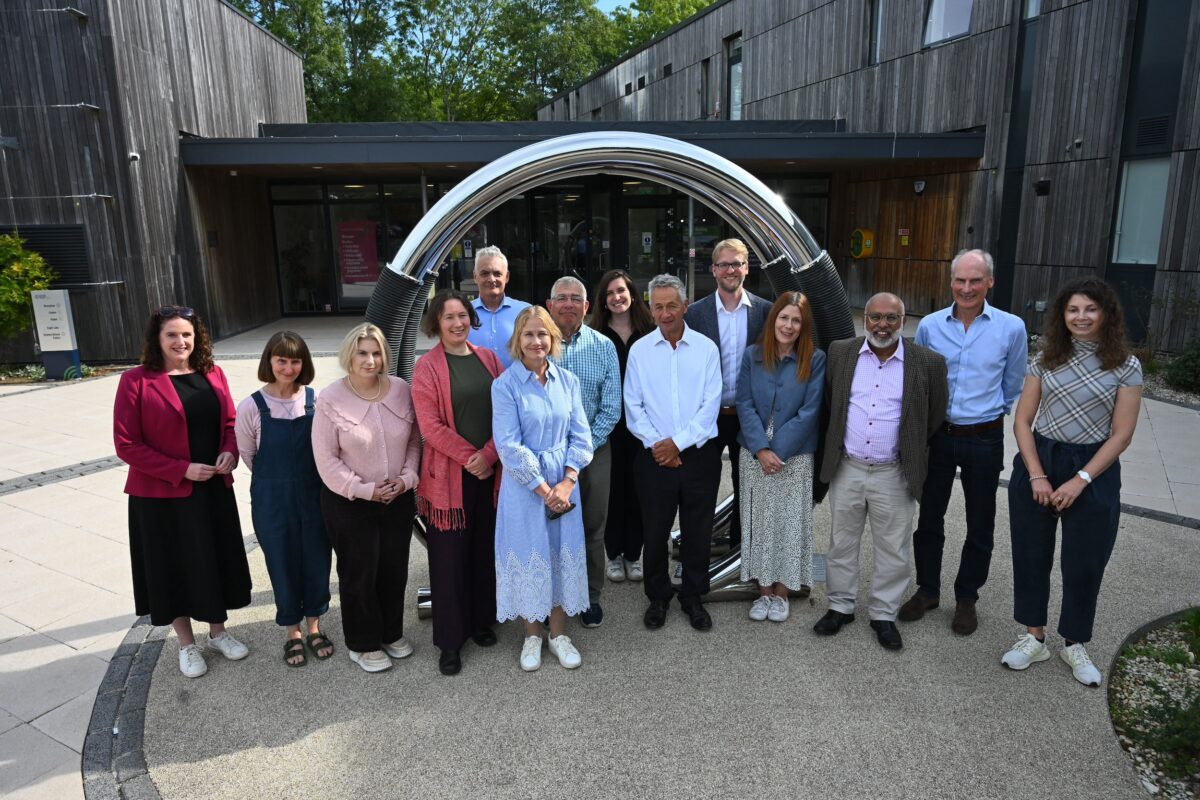
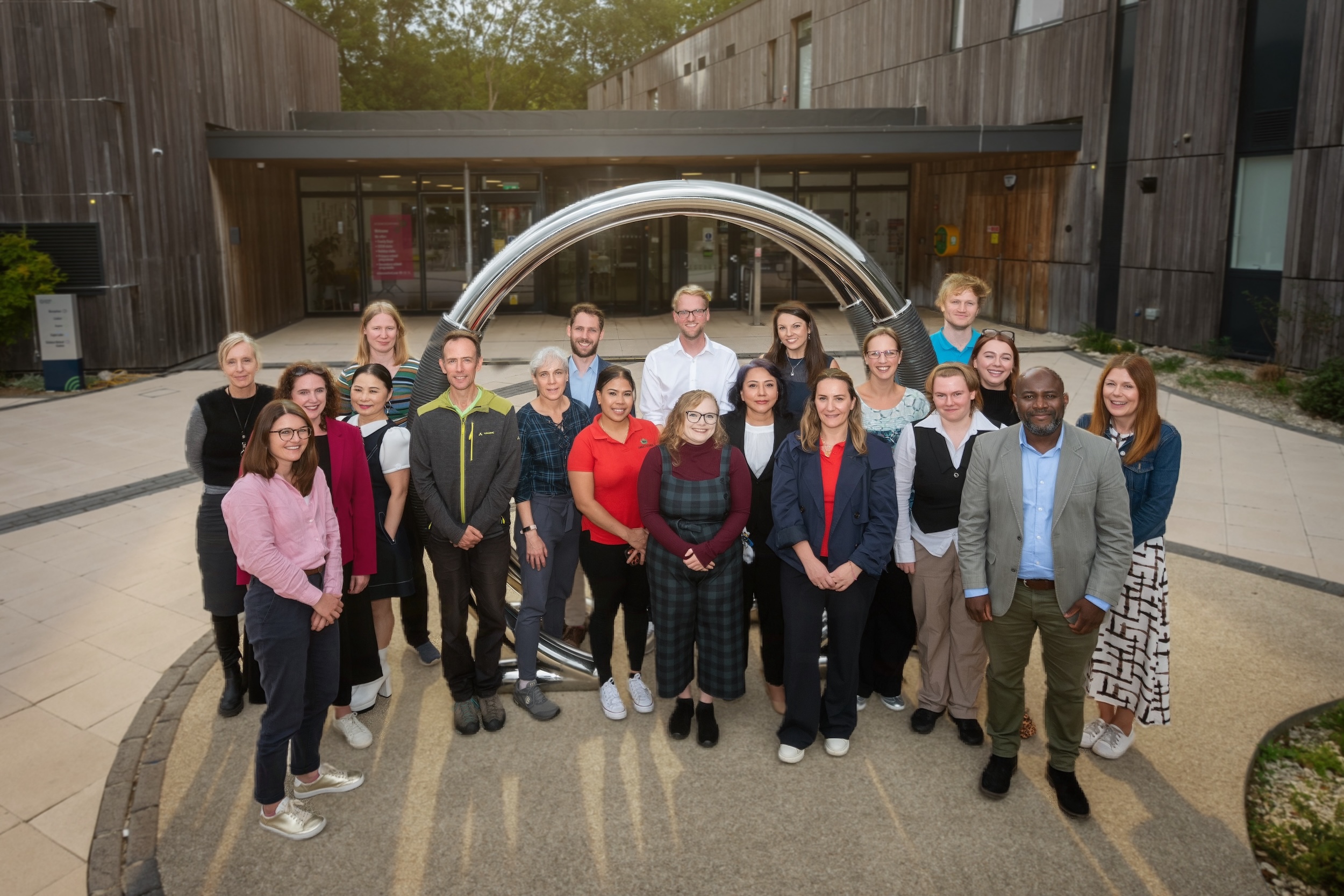
Photo: Matt Francis and staff of The Oxford Trust